
Our Services / Wright County, MN
Storm Damage Roof Repair in Wright County, MN
Storm damage roof repair is seasonal work in Wright County, because central Minnesota takes hail and straight-line wind most summers. The storms are real. So, unfortunately, are the out-of-state crews that follow them, knocking on doors and finding damage on every roof they climb. We take a different approach: we inspect, we photograph, and we tell you what is actually there, whether that means a full insurance-grade replacement, a handful of shingles, or nothing at all. If your roof took a hit, here is what happened up there and what to do about it.
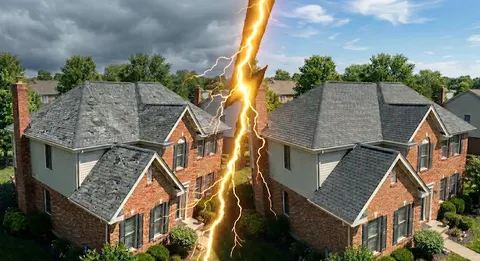
What hail and wind actually do to an asphalt roof
Hail damage is usually invisible from the ground, which is why it gets both underclaimed and overclaimed. When a hailstone hits an asphalt shingle, it crushes the granule layer into the asphalt mat beneath, leaving a soft bruise where granules are knocked away and the mat is fractured. The shingle keeps shedding water for now, but the exposed asphalt cooks in UV and the fracture grows, so a hail-hit roof fails years early rather than immediately. That is why insurers treat widespread hail bruising as damage even when the roof is not leaking yet. Dented gutters, downspouts, and soft metal vents are the supporting evidence, since hail that dented aluminum also hit the shingles.
Wind damages differently. Gusts get under shingle edges and either crease them, break their seal strips, or tear them off outright. A creased shingle has a broken mat at the fold and will fail there. Broken seals are sneakier: the roof looks intact, but unsealed tabs lift in every subsequent wind until one finally goes. After a big blow we check edges, ridges, and the field for creasing and seal failure, well beyond the obvious bare spots.
What to do first after a storm
The first hours after a storm decide how smoothly everything after goes. None of it requires getting on the roof yourself, and we would rather you stayed off it. Wet shingles are slick, and hail-bruised roofs give no visual warning of soft decking.
Start from the ground and from inside. Note the date and rough time of the storm, walk the yard, and photograph anything the storm left behind: shingles or shingle pieces, granule piles below downspouts, dented gutters, damaged screens or siding. Check ceilings and the attic for new stains or drips. If water is actively coming in, catch it and move belongings, and have a tarp installed properly rather than improvising on a wet roof. Then get an inspection scheduled before making any permanent repairs, because your insurer will want to see the damage as the storm left it.
- Photograph damage from the ground: yard debris, granules at downspouts, dented gutters and vents
- Note the storm date and time for any future claim
- Check ceilings and the attic for new water
- Stay off the roof; leave the climbing to us
- Do not sign anything on your doorstep after a storm
- Schedule a professional inspection before permanent repairs
Our inspection: documented, not dramatized
A storm inspection is only worth what its documentation can prove later. We walk every slope and photograph what we find where we find it: hail bruises marked and shot up close, creased and unsealed shingles lifted and photographed, collateral damage on gutters, vents, and flashing recorded slope by slope. You get the photos and a plain-language summary of what the storm did, or did not do, to your roof.
That last part matters to us. Some roofs we inspect after a storm are fine, and we say so, because a homeowner filing a claim on cosmetic wear wastes a claim and erodes trust with their insurer. When the damage is real and widespread, our documentation gives you what you need to start a claim on solid footing, and our insurance claims page walks through exactly how that process goes from here.
Why homeowners pick us for storm damage
- Slope-by-slope photo documentation of every finding
- Honest calls, including the roofs that are fine
- Hail bruising and wind creasing identified, not guessed at
- Proper temporary protection when a roof is actively leaking
- Documentation formatted to hold up in an insurance claim
- Local crew you can find after the storm season ends
How it works
- STEP 1
Report the damage
Tell us what happened and what you are seeing. If water is coming in, we prioritize getting the roof protected properly.
- STEP 2
Full-roof inspection
We walk every slope and document hail, wind, and collateral damage with marked photos, then give you the honest verdict.
- STEP 3
Repair plan or claim support
Small damage gets a straightforward repair quote. Widespread damage gets documentation ready for an insurance claim, and we support that process.
- STEP 4
Repairs completed
Approved work is done to the same standard as our full replacements, with matching materials and a final walkthrough.
Storm Damage questions
How can I tell if my roof has hail damage?
From the ground, look for supporting evidence: granules piled below downspouts, dented gutters or vents, and damaged screens. The actual shingle bruising is usually invisible from below, which is why a roof-level inspection settles it. If hail dented your soft metals, the shingles took the same hits.
My roof is not leaking after the hail storm. Is it still damaged?
Possibly, yes. Hail bruising fractures the shingle mat under the granules without opening an immediate leak, then the damaged spots weather out over the following years. That delayed failure is exactly why insurers cover hail damage before leaks appear, and why an inspection soon after the storm matters.
Should I trust the storm crews knocking on my door?
Be careful. Some door-knockers are legitimate, but storm-chasing crews that find damage on every single roof, pressure you to sign on the spot, and vanish when the season ends are a known pattern in Minnesota. Get an inspection from a local company you can call back in five years, and never sign anything at the door.
Is wind damage covered the same way as hail?
Generally yes, wind is a covered peril on standard homeowner policies, subject to your deductible and policy terms. Torn-off shingles are obvious, but creased shingles and broken seal strips count too, and they are easy to miss without lifting tabs by hand. Documentation of each slope is what makes a wind claim straightforward.